Metacognition: A part of the Leadership Journey
Each of us have one body, one mind, and one spirit. Each of these three things interact to form how we see and experience the world. No two experiences, even of the same event, are ever exactly the same. Each of us possess stocks of knowledge, which are assumptions we use to view, interpret, and experience the world around us (Dugan, 2017). Humans evolved operating on these assumptions because they are quick and can be the difference between safety and danger. Stocks of knowledge form based on lived experiences and socialization factors. This day in age, our stocks of knowledge are applied to societal circumstances more than survival circumstances.
A person may associate the concept of leadership with specific personality traits, physical characteristics, or specific settings. This is an example of how stocks of knowledge can apply to the concept leadership. The tricky part about stocks of knowledge is that they are engrained in who we are, so unless we take time expand our perspectives, we just assume what we believe to be normal and what everyone else believes and then get frustrated when this isn't the case. This can cause issues. Cue metacognition!
Metacognition is the practice of thinking about how our minds think. This process allows us to explore what we know and how we know it based on our personal stocks of knowledge (Dugan, 2017). This process has been an instrumental piece of my leadership journey.
Growing up watching two very strong and independent women, I associated leadership with strength, confidence, good communication, charisma, and work ethic. To this day, I still believe many of these things make for a strong leader; however, I also understand this isn't the only, correct, view of leadership. I understand that my body, mind, spirit, and experiences such as growing up in the United States of America in primarily white, affluent communities, my identity as a Christian woman, and my background as an athlete and collegiate student athlete, all have an impact on how I view and enact my leadership.
Most of my life I assumed leaders fit into a singular mold based on my interpretation of what a leader should be, which could not be further from reality. Engaging in metacognition has helped me learn more about myself and the world around me. Metacognition offers an opportunity to better understand how your own mind operates by reflecting upon and analyzing how you arrive at the assumptions and thoughts you have.
Leadership is not a solo act, which makes metacognition all the more important. Reflecting upon your own thought processes and decisions can be useful to better understand why you may think differently than someone else you are working with that has a different background and set of experiences. Having a clear understanding of how you arrived at a specific decision offers an opportunity for clearer communication with someone that has a different perspective than you. Metacognition also can have a grounding and humbling effect, which is instrumental to my personal approach to leadership. By recognizing that each person has a different set of experiences that impacts how they move through the world, I am better able to see and connect to the other person's humanity. Without connection, leadership cannot exist. Therefore, consistent participation in metacognition has helped me gain emotional intelligence, social awareness, and empathy within my leadership practice.
References
Dugan, J. P. (2017). Leadership theory: Cultivating critical perspectives. Jossey-Bass.


What is My Why?
A why is foundational to success (Sinek, 2009). This is true for individuals, teams, all the way to big corporations. For example, Apple's why is 'think different' (Apple). This simple why is what this organization uses to guide their decision-making. This is why their commercials are very unique. It is also why Apple continues to come out with new phones and new features constantly. Their why also influences their culture fostering a shared sense of creativity, innovation, and challenging the status quo (Apple, n.d.).
My personal why is to glorify God. My faith in Jesus Christ is my foundation and anchor of my identity. Full transparency, this is really challenging, and I fall short a lot of the time. However, it remains the guiding principle I use when interacting with the world and within leadership contexts.
Jesus was a faithful servant leader. He demonstrated courage, selflessness, empathy, grit, kindness, and passion. Throughout his time on earth, he spent time interacting with all kinds of people, and followed through on what he promised.
As a Christian leader, I strive to think of others more and myself less. In this way, I like to take time to interact with people, make them feel seen, and ensure they feel valued. I also strongly believe in placing the needs of others above my own and serving. At work, this looks like taking extra time with each patient so that they know I care more about them than just getting through my day. This can also look like planning out sessions based on each patient's needs and situations so that he/she/they can get the most out of his/her/their treatments.
Jesus was also very determined and passionate. Jesus had nothing but the clothes on his back and a mission. He stopped at nothing to ensure he followed through on what he promised. This is how my why connects to my work ethic and enthusiasm. I am passionate about trying my best on everything I do, and I love to share encouragement and energy with others. This aspect of my why was especially evident throughout my time as a collegiate athlete. I would spend 5 days a week throughout the summer ensuring I was physically in shape for our season. In addition, I was a loud and passionate leader on the field in hopes of building team morale and confidence. Even upon tearing my ACL, MCL, and meniscus my junior year of college, I returned to play two more seasons!
As I continue moving forward into my career, my vision involves positively impacting the health and well-being of others. I can do this my staying true to my why of glorifying God and striving to live as Christ-like as I can.
To do this, I must consistently dedicate time to self-reflection and prayer and time in God's word. I must also continue pushing my comfort zone by taking on new challenges/tasks and also personally challenging myself to be more vocal and assertive, instead of worrying about what others think of me.
References
Apple. (n.d.) Ethics and compliance. https://www.apple.com/compliance/
Sinek, S. (2009). Start with why: How great leaders inspire everyone to take action. Portfolio
Vulnerability, Awareness, Service, & Groupwork in Leadership
Vulnerability is not an indication of weakness. In fact, Brene Brown (2011) describes vulnerability as the foundation of authentic relationships. Vulnerability can take many forms. For example, I show vulnerability by receiving feedback without getting defensive. I also model vulnerability by asking for help when needed. These aspects of my vulnerability are well-developed, and they each have served me along my leadership journey. One aspect of vulnerability I could use improvement in is admitting my mistakes. Accountability is of upmost importance to me, so the dissonance I feel when I do make mistakes and try to hide them is very uncomfortable. I have found myself in many situations where when I have confessed a mistake, I have been punished. Unfortunately, I got into the habit of hiding my mistakes and trying to fix them before they were noticed. However, this is a dishonest approach, and I want to improve this.
Throughout the leadership program, I have made improvement in my use of direct communication. Conflict and confrontation are my biggest weaknesses as a leader. Prior to taking Communication Theory and Ethics and diving deeper into my faith, I would avoid hard conversations and hide my true feelings because it was easier, and I thought I was protecting the feelings of those around me. However, this past year both on and off the soccer field, I learned how wrong this was. By hiding my true opinions, I lost the trust of others. Since these negative experiences, I have made more of an effort to speak directly. This still super challenging for me (so any advice would be greatly appreciated), but I recognize the importance of this change in all aspects of my life.
Our first course included content on different types of reflection and metacognition. This information has served so helpful for accurate self-awareness. My current mode of self-reflection involves daily gratitude, kindness/positivity I showed throughout the day, places I fell short throughout the day, and anxieties I am giving to God. Consistent self-reflection has enhanced my self-awareness by helping me identify how my daily actions are aligning with my why and values.
While diving into my faith, my passion for service was also reinforced. I am so fortunate, and I believe that blessings are meant to flow through us, not to be hoarded. With the resources and education I have, I have a real opportunity to positively impact those that have less. Further, I believe that a shared vision of service, or larger others-focused purpose, is super constructive to a supportive culture. This is the culture my high school soccer coach created where we were always reminded that we were a part of something larger than ourselves and that our individual actions both on and off the field mattered to the whole team. Which brings me to initiative and group work. Athletic settings serve as great practice for these two skills. Through my time playing sports, I learned to value the contributions of others. Soccer is a beautiful sport that requires connection and teamwork. Every player serves a purpose even if they don't receive the ball. The same goes for group work and leadership. Some roles may be more flashy than others, but valuing each individual and what they bring to the table is crucial. Initiative drives progress. Identifying problems is easy, but initiative to brainstorm and make something happen is hard. A strong leader is willing to self-sacrifice and put in the extra work to get the group moving. Many times, people want to take action but don't know how or are held back by fear. Therefore, as a leader, I strive to encourage others and foster an environment in which people feel safe to take risks and grow, aka foster an environment of vulnerability!
References
Brown, B., (2011). The power of vulnerability [Video]. YouTube. https://www.youtube.com/watch?v=iCvmsMzIF7o


Creating & Leading Change using Diverse Perspectives
When I think of innovation, I primarily think of technology. While this is a form of innovation, there are so many more ways innovation can be used for good within the world. Leadership can greatly benefit from innovation, and what is even more exciting is that this interaction can look different based on the leader and the environment!
While taking Leadership Theory and History, Critical Theory stood out to me the most. This theory describes how power relations interact to create the multiple realities that exist in our world. What is more, this theory aims to identify and transform socially unjust structures (Dugan, 2017).
I believe Critical theory ties into innovation through questioning existing systems. As a white, privileged American, I was blind to the power structures that consistently prioritized me over others. This took away my ability to truly see people because I had assumed everyone had the same experiences as me. Decisions I made as a leader were based on the status quo, which failed to include many valuable and diverse perspectives and voices.
An example of inequitable decision-making that reinforces the status quo and maintains unfair power dynamics is the food system. Food deserts are prominent throughout the country and are neighborhoods or communities with limited access to affordable and nutritious foods (Walsh, 2022). Food deserts are a result of varying incomes, varying access to transportation, and grocery store locations. With industrialization in America and a prioritization of profit, large grocery story chains with affordable pricing are strategically placed in more affluent neighborhoods to ensure high profits. Small local grocery stores are beginning to disappear because of the commodity pricing of large grocery store chains. This current system leaves individuals in food desert communities vulnerable to food insecurity, and this issue also negatively impacts the livelihoods of small, local farmers and grocery store owners (Walsh, 2022). This is a very complex, adaptive issue without a simple fix; however, for true change to result, leaders must be willing to listen to the populations directly affected by food insecurity and food deserts and challenge the existing stratifying systems. In addition, leaders must be willing to include these diverse perspectives in their approach to the issue so that the solution is effective for specific populations. This is a form of innovation. Taking on a problem with different diverse lenses instead of the status quo procedure, which prioritizes the pockets of industry leaders over the health and wellbeing of American people.
I believe that I can prioritize diverse perspectives within my personal leadership because of my ability to make people feel welcomed and heard. A recent job I held was a youth Registered Behavior Technician where I spent time daily building rapport with children with Autism and learning to understand them and what they needed through nonverbal communication. This job taught me a lot about human dignity and empathy. My current role as a Transcranial Magnetic Stimulation (TMS) Technician requires me to engage with individuals with varying mental health issues. I listen to what they are struggling with and what changes they want to make in their lives and help support them on their healing journeys. Through this position, I have learned the value of actively listening. With depression, anxiety, autism, OCD, every single case is different. This is representative of the human population. Every single one of us have different experiences and perspectives, and we can all learn from one another. But in order to do this, we must be willing to welcome people that are different than ourselves and take time to listen to what they have to say. I have learned so much from all of the people I have served, and they have helped me develop greatly in my understanding of the world and leadership. I now understand how important it is to gain as much information from others involved in a community issue as possible to create the most effective and innovative solution!
References
Dugan, J. P. (2017). Leadership theory: Cultivating critical perspectives. Jossey-Bass
Walsh, O. (2022). Food deserts: What they are and what causes them. The Humane League. https://thehumaneleague.org/article/food-desert
Vulnerability, Authenticity & Self-Authorship in Leadership
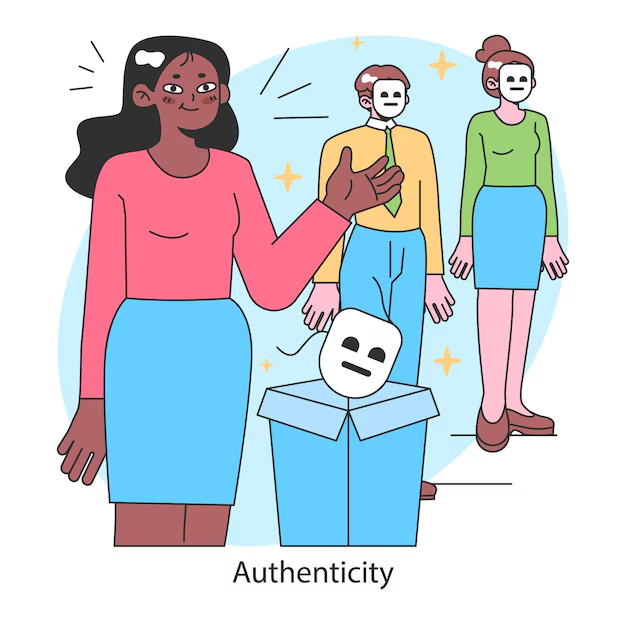
How much of what I want stems from my personal desire versus what the world says I should want? How much of how I behave in professional and social settings is authentic? I have to admit that I have spent a large portion of my life behaving in a pseudo-authentic manner. Pseudo-authenticity results from a projected 'authentic' image that isn't genuine (Johnson, 2020). I have a recent example where my pattern of people-pleasing and behaving based on my environment almost led to a job I would not have liked or performed well in.
Right when I moved to Denver I was feeling pressure to find a job as soon as possible. I felt behind in comparison to my peers who had good jobs and were getting engaged and married! I came across a listing on Indeed for a company I later found out was a fundraiser for large nonprofit organizations. I was drawn in by their claims to help communities, and I was so excited when I had my first virtual interview. It was a new organization, so my first interview was with the CEO, who was very passionate about his company. He asked me questions about my ability to take rejection, my ability to connect with others, and my desire to work in a competitive environment where my results directly impacted my pay. I told him everything he wanted to hear even though deep down the things he was telling me didn't sit right. Upon getting a second interview, in person, the feeling in my stomach grew. I did not resonate with the emphasis on individualistic success. Additionally, the connection they claimed to value was very surface level with the ultimate motivation of getting patrons to commit to monthly donations. I spoke with the woman who was second in command, and while I admired her tenacity, our conversation further reinforced the mismatch between myself and this position. I was so eager to get a job and was willing to pseudo-authentically present myself to be a competitive candidate. Could I have gotten a job offer? Maybe. But the environment was not a place I could have been authentic. Nor was it a place I felt I could make a true impact to better the world around me.
This experience reinforced my passion for connection and ultimately made me more confident in my decision to become a TMS technician. This experience also helped me understand that it is ok to not fit somewhere. Historically I have put a great deal of pressure on myself to be perfect in everything I do, but this doesn't serve anyone if I am expending extra energy to be something I am not. I don't have to be everything that people want to be, and I am learning to give myself grace in that regard.
My belonging statement was reinforced through this experience, and further proved I believe belonging is not based on perfection but upon grace, connection, and the shared work of serving others.
References
Johnson, C. E. (2020). Meeting the Ethical Challenges of Leadership: Casting Light or Shadow (7th Ed.).